Generate Interview Outlines#
I've been getting questions about how to generate interview outlines using AI, so I wanted to share a prompt you can try. It's a comprehensive prompt, so be sure to copy the entire thing before pasting it into the TensorCase platform. Scroll all the way down to the end for the prompt.
HOW TO USE THIS PROMPT:#
1. Create a New AI Draft Page
Click the "+ AI DRAFT" button at the top right of your screen when you're in the platform.

2. Name Your New Page
Give it a descriptive name like "Interview Outline - [Interviewee Name]."
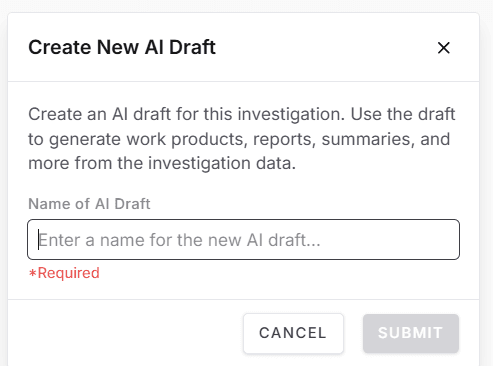
You'll then see a new tab appear at the top of the screen.

3. Open the AI Instruction Box
Click the "AI" button on your drafting page to open the "User Instruction" box.

4. Paste the Prompt
Copy the entire prompt below and paste it into the User Instruction box.

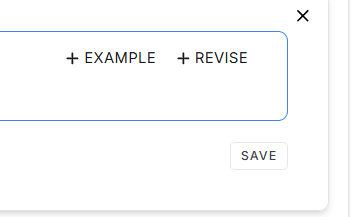
5. Save the Prompt
Click the "Save" button at the bottom right of the User Instruction box.
6. Customize for Your Case
Go back to your pasted prompt and fill in the bracketed sections with your case details. Use the @ function to select specific documents:
- Specify interviewee type (complainant, respondent, witness, third-party)
- Indicate whether it's an initial or follow-up interview
- Select reference documents using
@ - Select prior interview notes to incorporate (if applicable)
7. Generate Your Outline
Click "Generate" and the AI will produce a structured interview outline with numbered* questions organized into logical sections. Each question will include document references, rationale, and suggested follow-up questions.
*Note: Occasionally, the output may default to paragraph form. In that case, enter this follow-up instruction:
"Format as a numbered list of questions that can be asked directly to the interviewee, organized into sections."
8. Review and Refine
Click "Accept" to load the outline into your page, then edit and customize based on your professional judgment and case strategy.
THE PROMPT:#
Generate a comprehensive and exhaustive interview outline based on the information below. Output must be formatted as a numbered list of questions that can be asked directly to the interviewee, organized into sections. Under each numbered question, include bullet points with: document/source reference, why it matters, and suggested follow-up questions.
INTERVIEWEE TYPE: [complainant, respondent, witness, third-party; initial or follow-up]
REFERENCE DOCUMENTS: [Enter "shift + @" to select relevant documents]
PRIOR INTERVIEW NOTES: [Enter "shift + @" to select interviews to reference]
MANDATORY CONSTRAINTS: Generate questions only from provided materials—do not invent facts. Be exhaustive and thorough: identify every potential gap, every witness to be identified, every document to request, every timeline inconsistency, and every alternative explanation to explore. Frame questions neutrally without presuming misconduct or making assumptions. For respondents, ensure meaningful opportunity to respond to allegations and offer explanations. Make questions open-ended where possible to draw out facts without leading the interviewee. Generate enough questions for complete coverage—err on over-preparation. Include multiple angles for each issue. Anticipate evasive answers and provide layered follow-up questions. Make every question case-specific and directly tied to the provided documents. Begin with easier background questions before moving to more difficult topics.
CRITICAL CONFIDENTIALITY REQUIREMENT: Frame questions to avoid revealing the identities of other interviewees or what specific individuals said in their interviews. Instead of asking "John said X happened—is that accurate?" ask "I understand there may have been witnesses to this event—can you tell me who was present?" Instead of "Maria told us you said Y" ask "What did you say during that conversation?" Use neutral phrasing like "information has come to light," "during the investigation," or "based on documents/information reviewed" rather than attributing statements to specific individuals.
OUTPUT FORMAT REQUIREMENTS:
Write each question as it would be spoken directly to the interviewee (e.g., "Can you tell me what happened?" not "Ask what happened")
Number questions sequentially (1, 2, 3, etc.) within each section
Questions should be ready to read aloud in an interview without modification
Questions must not disclose who else has been interviewed or what they specifically said
Under each numbered question, include bullet points for: document reference, rationale (why it matters), and follow-up questions written as direct questions to ask
Flag any questions that may inadvertently reveal other interview content and recommend sequencing strategies
Organize questions into logical sections based on the case
CORE QUESTION AREAS TO COVER (adapt based on interviewee type):
FOR COMPLAINANTS: What happened (open narrative); date/time/duration of incident(s); how many times; where and how it happened; who else saw or was present and what they said/did; relationship with respondent; what complainant did and said in response; how respondent reacted; who complainant reported to and when; who else complainant told; whether respondent involved in other similar incidents; why complainant believes incident occurred; who else can provide relevant information; any delay in reporting and reasons; notes/documents/evidence; anything respondent provided in writing; how situation made complainant feel/impact; desired resolution/outcome; anything else not asked about.
FOR WITNESSES: What they witnessed (open narrative); date/time/duration; where it happened; who was involved; what each person did and said; who else saw it; what witness did after witnessing; whether witness said anything to parties; whether witness reported to anyone and response received; who else witness told; why witness believes incident occurred; whether witness has seen similar behavior from respondent previously; who else could provide information; notes/documents/evidence; anything else not asked about.
FOR RESPONDENTS: What happened (open narrative without presuming guilt); where respondent was when incident took place; if not denied: when/where it happened and circumstances leading up; who else was involved and how; connection/relationship with complainant; recount dialogue/exchange in order; what complainant said or did; evidence supporting respondent's account; who else should be interviewed; who respondent talked to about incident and what was said; notes/documents/evidence supporting respondent's version; anything else not asked about; anything else relevant to share.
SUGGESTED SECTIONS (adapt as needed):
Opening/Rapport: Role clarification, confidentiality, background, process overview, open narrative invitation
Core Issues: Each specific allegation explored from multiple angles (what/when/where/who/why/how)
Chronology/Timeline: Precise sequence, dates/markers, temporal gaps, before/during/after circumstances
Corroboration/Evidence: Witnesses, documents, communications, basis of knowledge, notes/documentation
Inconsistencies/Credibility: Address contradictions without revealing sources; explore alternative explanations; assess reliability; examine bias/motive diplomatically; ask about prior similar incidents
Impact and Response: How interviewee responded, what they did/said, who they told/reported to, reactions
Relationships and Context: Connections between parties, why incident occurred, workplace dynamics
Role-Specific: Impact/outcomes/fears (complainant), explanations/mitigating factors (respondent), observation limits (witness)
Additional Witnesses and Evidence: Who else can shed light, what information they have
Closing: Anything else not asked, anything else relevant, other witnesses/evidence, concerns, follow-up availability
FINAL SECTION: CRITICAL ANALYSIS
After all questions, provide separate analysis paragraph covering: remaining evidentiary gaps, additional witnesses to interview, documents to obtain, sequencing recommendations to avoid revealing interview content, credibility factors, legal/procedural risks, alternative theories to explore.